
Table of Contents
Applications of Inflatable Decontamination Tents
Inflatable decontamination tents are increasingly becoming essential in emergency response scenarios. These tents provide a quick and efficient way to decontaminate individuals exposed to hazardous materials, such as chemical, biological, radiological, or nuclear agents. Their portability and rapid deployment make them ideal for use in various settings, including disaster sites, military operations, and industrial accidents.
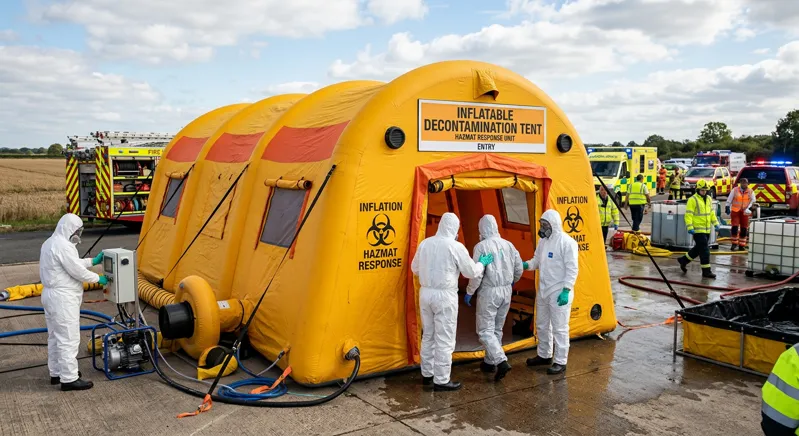
One of the major advantages of inflatable decontamination tents is their versatility. They can be set up almost anywhere, including urban environments and remote locations, offering responders a flexible solution for handling contamination incidents. Additionally, their inflatable design allows for easy transportation and storage, which is critical when response time is of the essence.
Moreover, these tents often come equipped with specialized filtration and drainage systems to ensure the safe removal of contaminants. This feature helps protect both the individuals undergoing decontamination and the emergency personnel conducting the process.
Design Features and Benefits
The design of an inflatable decontamination tent focuses on efficiency and safety. Typically, these tents are made from durable, chemical-resistant materials that prevent leakage and contamination spread. The airtight structure maintains internal pressure, ensuring stability and protection against environmental elements.
Inside the tent, modular configurations allow for a customizable setup depending on the specific needs of the incident. This might include multiple chambers for washing, drying, and medical evaluation. The tents can also accommodate various equipment, such as showers, air scrubbers, and lighting, to enhance the decontamination procedure.
Users benefit from the intuitive, tool-free inflation systems that reduce setup time dramatically. The entire process can often be completed by just a few responders, minimizing exposure to hazardous agents. Additionally, the compact nature of these tents means they occupy little space when stored, further adding to their practicality.
Challenges and Considerations
While inflatable decontamination tents offer numerous advantages, there are challenges that emergency teams must consider. Ensuring a reliable air supply to maintain the tent’s pressure is crucial, especially in prolonged operations. Failures in the inflation system could compromise the integrity of the tent and the safety of those inside.
Maintenance and regular inspection of the tent’s material and components are also vital to avoid leaks or tears during deployment. Moreover, responders need adequate training to operate the tents effectively under stressful and hazardous conditions. Without proper knowledge, the decontamination process could be less effective or even put personnel at risk.
Cost is another factor; while many inflatable decontamination tents are cost-efficient compared to traditional rigid setups, initial investment and upkeep expenses can still be significant for some organizations.


