
Table of Contents
Advantages of Using an Inflatable Stage Tent
When organizing outdoor events, having a reliable shelter is crucial to protect performers and equipment from unpredictable weather conditions. An inflatable stage tent provides an innovative solution by combining portability with sturdy protection. Unlike traditional tents, these tents are lightweight and can be set up much faster, saving valuable time during event preparations.
The design of an inflatable stage tent allows for a flexible yet secure structure that can withstand wind and rain better than many conventional options. Its inflatable frame eliminates the need for heavy metal poles or complex assembly hardware, making transportation and setup manageable for small teams or even individuals. Additionally, the tent’s material is often water-resistant, adding an extra layer of defense against inclement weather.
Another advantage lies in the versatility of inflatable stage tents. These tents come in various sizes and shapes, allowing organizers to find the perfect fit for stages of different dimensions. Their aerodynamic shape can also improve acoustics by minimizing wind noise interference, enhancing the overall concert or event experience. Moreover, these tents often feature customizable branding opportunities, which can be a boon for sponsors or artists looking to increase visibility.
Setting Up and Maintenance Tips for Inflatable Stage Tents
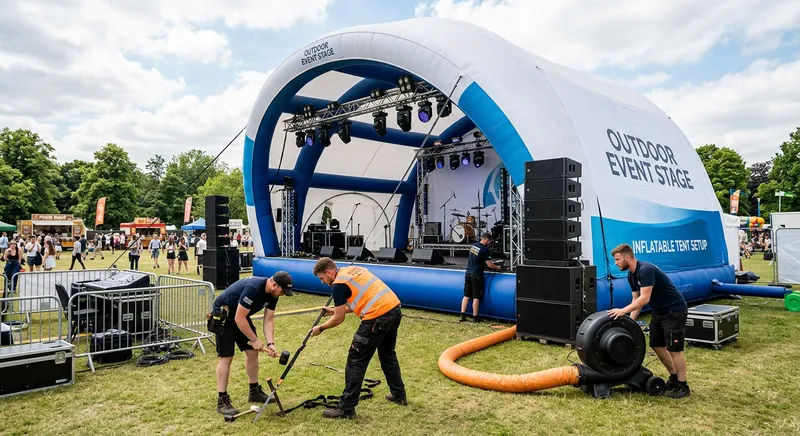
Setting up an inflatable stage tent requires basic knowledge but is generally straightforward due to the self-supporting air frame technology. Before inflating the structure, it is important to clear the ground of debris and ensure the surface is as flat as possible to avoid damage. Once the tent is laid out, a portable blower can be connected to the inflation tubes, and within minutes, the tent will take shape.
Securing the tent is a critical step after inflation. Most inflatable stage tents come with anchoring systems such as ropes, pegs, or sandbags to keep them stable during windy conditions. Operator attentiveness in this stage prevents accidents and prolongs the tent’s lifespan.
Maintenance involves regular inspection for punctures or wear, especially around seams and valves. Since the materials used are typically waterproof and UV resistant, the tent can endure harsh outdoor environments; however, proper cleaning after use helps preserve its condition. Deflating the tent properly and storing it in a dry, cool place are equally important decisions to prevent mold and material deterioration.
Applications and Customization Options for Inflatable Stage Tents
Inflatable stage tents are highly adaptable and cater to a multitude of events such as festivals, concerts, trade shows, and even private celebrations. Their quick setup and compact storage make them ideal for traveling touring acts or pop-up stage events. Furthermore, the visual impact of a curved or uniquely shaped inflatable tent can enhance the atmosphere, making the stage a focal point for attendees.
Customization is a key strength of inflatable stage tents. Event organizers can choose from a variety of colors, prints, and materials to match the theme or branding requirements of their event. Some suppliers offer tailor-made designs, including transparent panels, integrated lighting, or side walls with different opening options. This level of personalization not only boosts aesthetics but also addresses practical needs such as ventilation and visibility.
Additionally, incorporating branding logos or sponsor information directly onto the inflatable fabric maximizes exposure and marketing potential. With advancements in printing technology, high-resolution graphics can be applied seamlessly without compromising the tent’s structural integrity. This makes the inflatable stage tent not only a functional asset but also a promotional tool, efficiently drawing attention to the main event and sponsors alike.


