
Table of Contents
Evolution of Inflatable Military Tents
In the realm of military operations and disaster relief efforts, the need for rapidly deployable and easily transportable shelter solutions has driven advancements in technology. One such innovation that has gained significant traction is the inflatable military tent. These structures offer a portable, lightweight, and durable alternative to traditional tents, providing military personnel and emergency responders with a reliable shelter option in various challenging environments.
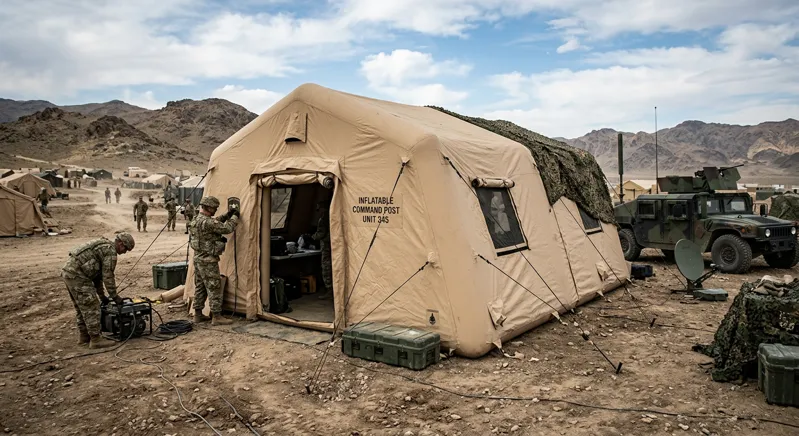
The concept of inflatable structures for military purposes dates back several decades, with early designs focusing on basic air-supported tents that could be inflated within minutes using air pumps. However, these initial models were limited in their size, durability, and functionality. Over time, advancements in materials, design, and manufacturing processes have paved the way for the development of more sophisticated inflatable military tents that meet the stringent requirements of modern operations.
Today, inflatable military tents come in a variety of sizes and configurations, ranging from small, individual shelters to larger, multi-room complexes that can accommodate entire units. They are typically constructed from high-strength materials such as reinforced PVC or nylon, which are not only lightweight but also resistant to harsh weather conditions, punctures, and abrasions. Additionally, many inflatable tents are equipped with advanced features, including integrated flooring, ventilation systems, and modular components that allow for customized setups based on specific mission requirements.
Benefits of Inflatable Military Tents
One of the key advantages of inflatable military tents is their rapid deployment capability. Unlike traditional tents that require assembly with poles and stakes, inflatable structures can be set up within minutes by simply inflating them with air. This quick and easy deployment process is particularly beneficial in emergency situations where time is of the essence, allowing personnel to establish shelter quickly and focus on critical mission tasks.
In addition to their speed of deployment, inflatable military tents offer enhanced portability and versatility compared to conventional shelter options. These tents can be deflated, packed into compact storage bags, and transported to remote or hard-to-reach locations with ease. Their lightweight design makes them ideal for air drops, transport on vehicles, or deployment in rugged terrains where traditional shelters would be impractical.
Furthermore, the durability and resilience of inflatable military tents make them well-suited for prolonged field use in demanding environments. Whether enduring extreme temperatures, high winds, heavy rainfall, or rough terrain, these structures are designed to withstand the rigors of outdoor operations while providing a safe and comfortable living space for personnel. Additionally, their modular nature allows for scalability, with units being easily interconnected to create larger complexes as needed.
In conclusion, inflatable military tents represent a significant advancement in portable shelter technology, offering a versatile and efficient solution for military and humanitarian missions alike. With their rapid deployment capabilities, portability, durability, and customization options, these innovative structures provide a critical resource for personnel operating in challenging and unpredictable environments. As technology continues to evolve, the future of inflatable military tents holds great promise in meeting the ever-changing needs of modern defense and disaster response strategies.


